Available 24/7 - Free Consultation
Call (602) 493-3600

If you or someone you care about has been charged with a crime, you need to know the basics of Criminal Defense Law in Arizona. As a knowledgeable and skilled criminal defense attorney in Phoenix, Joshua S. Davidson can provide you with answers to the many questions that can arise after being charged. At the Davidson Criminal Defense & DUI Law Firm, we have a library of knowledge when it comes to legal questions and the laws in Arizona. Here you will find answers to many common legal questions, but we urge you to contact our law office directly to have your specific questions answered.
If you have been arrested, questioned by the police, or are under police investigation, you will most likely need to find representation. An attorney will be able to answer all of your questions and provide you with the support you need when facing criminal charges. If you find yourself asking whether or not you need a lawyer, the best way to find out is to contact one! After an attorney has all of the facts and information regarding your particular case, they will be able to determine if legal representation is necessary.
Because every case is different, developing an effective legal strategy means finding all of the facts and circumstances surrounding the specific arrest. A qualified Phoenix Criminal Defense Lawyer will make sure to gather all the information necessary to provide you with the best criminal defense possible. Contact Phoenix Criminal Defense Attorney Joshua S. Davidson to determine if you need representation.
During the police investigation is one of the most important times to have an experienced criminal defense attorney representing you. A lawyer can help ensure that your rights are protected during the investigation, a time when police and investigators may try to take advantage of you if you are not well informed of your rights. You will need an attorney to ensure that any evidence in your favor is investigated and preserved in the case.
The investigation process is an important time for gathering evidence, and without a lawyer this will be difficult to do. In many cases, a criminal defense attorney in Phoenix can bring evidence to the attention of police and prosecutors before the charges are even filed, increasing your chances of not being charged. It’s a difficult feat to convince prosecutors to drop charges once they have been filed, so your best bet is to have an attorney be proactive on your behalf.
You DO NOT want to speak with the police, or answer any questions they may direct towards you. Chances are they do not believe in your innocence and it is their goal to gather evidence against you in order to convict you. Their method to gather evidence is to get you to talk, and police investigators tend to ask questions that guide you into telling them what they want to hear. Some police and investigators may try to use deceptive tactics and lie to people who are under investigation. It is routine practice for police to get you to tell them “your side of the story.”
You may feel that this is a good opportunity for you to explain what happened, but the reality is that they can use your statement against you in court. Your decision to speak with the police should not be taken lightly, and you need an experienced Phoenix criminal defense lawyer to advise you.
We all like to believe that truth and justice prevails, but unfortunately with today’s court system, this is not always the case. Every day people are found guilty for crimes they did not commit, and this is a harsh reality you need to consider when trying to decide whether or not to hire a criminal defense attorney. The only way to ensure you are treated fairly within the court system is to seek qualified representation.
Bail is simply a financial assurance that the defendant will attend the court date after being released from custody. There are two ways to post bail. A “cash” bail may be posted with the custodial agency to cover the full amount of bail. If bail is exonerated at the end of the case, the defendant will receive a check for the entire amount posted. Also, a “bond” can be posted by a bail company.
Through this option, the defendant only has to pay roughly 10% of the entire amount to the bail company, who puts up the entire bail amount through a bond. If bail is exonerated, the 10% will not be returned to the defendant, because this is the fee paid to the bail company for fronting the entire amount.
A felony is a serious crime, punishable by more than one year in prison or by death. Defendants convicted of felonies tend to serve time in a prison rather than a jail. Crimes commonly considered to be felonies are aggravated assault, arson, burglary, embezzlement, grand theft, robbery, murder, rape, kidnapping and fraud.
A misdemeanor is a “lesser” criminal act, and is generally punished less severely than a felony offense. Many misdemeanors can be punished with monetary fines or jail time of less than one year. Examples of misdemeanors include petty theft, prostitution, public intoxication, simple assault, disorderly conduct, and vandalism.
Many individuals facing criminal charges – especially for the first time – are concerned they will look guilty or as if they have something to hide if they hire an attorney. In reality, nothing could be further from the truth. The right to be represented by an attorney is a fundamental right enshrined in our constitution. Judges and prosecutors alike recognize these rights and the important role criminal defense attorneys play in protecting all of our rights. In fact, it is often the practice of police officers to immediately request a consultation with their lawyer when involved in an on-duty shooting. Irrespective of whether you did or did not commit the offense for which you are charged, an experienced criminal lawyer can help ensure that you obtain the best possible outcome. Whether it means reducing your charges/penalty or fighting for your innocence at trial, proceeding without an attorney is never a good idea.
A basic DUI only requires the prosecution to show that your ability to drive was impaired to the slightest degree, and in most cases you’ll also see a companion charge alleging a blood alcohol concentration over 0.08%. Once your BAC climbs to 0.150% or higher, the charge escalates to what’s referred to as an extreme DUI, and at 0.20% or above, you’re looking at what’s sometimes called a super extreme DUI. The practical difference isn’t just a label: extreme and super extreme DUI convictions carry higher fines and longer mandatory jail terms than a standard DUI or BAC charge, even though the minimum penalties for a basic DUI and an over-0.08 BAC charge are essentially the same.
There are several paths that turn an ordinary DUI into a felony, sometimes called an aggravated DUI. The first is having this be your third DUI within the last seven years, which is automatically charged as a felony. The second is driving under the influence while your license is already suspended, revoked, or restricted. The third is having a minor child in the vehicle at the time of the stop. Aggravated DUI can also be charged if you are driving the wrong way on a freeway or have an existing ignition interlock requirement. Depending on the particular type of aggravated DUI charge involved, a mandatory term in the Arizona Department of Corrections, not county jail, may be required upon a conviction.
When you’re arrested for DUI, the officer typically serves you with what’s called an admin per se affidavit, which is the MVD’s mechanism for suspending your license administratively, separate from whatever happens in the criminal case. If you refuse the blood or breath test, MVD will move to suspend your license for 12 months. If you submit to testing and the result comes back at 0.08% or higher, or shows drugs or their metabolites in your system, MVD will instead move to suspend your license for 90 days. Either way, you only have 30 days from the notice of suspension to request an administrative hearing, and if you let that window pass, the suspension takes effect automatically and you lose your ability to challenge it.
A 90-day suspension is triggered when your blood or breath test comes back at 0.08% blood alcohol concentration or greater. The first 30 days of that period are an absolute suspension, meaning you cannot drive under any circumstances. For the remaining 60 days, provided you’ve completed the minimal alcohol screening required by the court and MVD, you become eligible for a restricted permit that allows you to drive to and from work and school. You may also be eligible for a SIIRDL, or Special Ignition Interlock Device Restricted License, which permits limited driving for work and other purposes during the entire 90 days with the added requirement that your vehicle is equipped with an interlock device during that time.
If police have probable cause to believe you’re impaired and ask you to submit to a blood or breath test as part of a DUI investigation, and you refuse, MVD will impose a 12-month suspension under Arizona’s implied consent law. Typically the first three months of that suspension are absolute, meaning no driving of any kind is permitted, while the remaining nine months often allow for driving with an interlock device installed in the vehicle for certain approved purposes.
No. The eye test, the walk-and-turn, and the one-leg stand are the three tests officers rely on most, and Arizona law does not require you to participate in any of them, even though officers have no obligation to tell you that. That said, your decision matters either way: if you decline, that refusal can be used as evidence against you in court, and if you participate, the officer’s scored assessment of your performance can be used to help justify your arrest and later introduced against you at trial. In most cases, it makes sense to hold off on these tests until you’ve had a chance to speak with an attorney.
The PBT, or preliminary breath test, is the small handheld device officers use before an arrest is made. Its result can’t be used against you in court, but the officer can rely on it to help establish probable cause to arrest you for DUI, and you are not required to take it even though officers aren’t obligated to tell you that. The Intoxilyzer, by contrast, is administered after arrest, and refusing it triggers the 12-month implied consent suspension discussed above. Because of that consequence, it generally makes sense to cooperate with the post-arrest breath test, though you’re entitled to ask to speak with an attorney first, so long as doing so doesn’t interfere with the investigation.
In most cases, yes, largely because refusing doesn’t actually prevent the police from getting your blood. Under Arizona’s implied consent law, refusal triggers a 12-month license suspension, and beyond that, officers can typically obtain a search warrant that allows them to forcibly draw your blood anyway. You do have the right to ask to speak with an attorney before deciding, and that’s a right worth exercising when circumstances allow it.
When someone is charged with extreme DUI, meaning a BAC of 0.150% or higher, Arizona law generally requires the police to impound the vehicle for 20-30 days at the time of arrest, on top of the higher fines and longer jail exposure that come with the charge itself. If the vehicle is titled to someone else, such as a spouse or a parent who loaned you the car, that registered owner can usually petition to have it released before the 20-30 days run. Absent that circumstance, there’s typically little that can be done to get the car back early.
In some situations, yes. Because Arizona’s DUI laws require jail time even on many first offenses, and those sentences can run well past 45 days, the law allows eligible individuals to serve the bulk of their sentence through home detention. Generally, you’d serve 20% of the jail term at the county jail and the remaining 80% at home, wearing an ankle monitor and, in most cases, having cellular monitoring equipment. Home detention also comes with strict conditions, including no alcohol consumption and random breath testing through the monitoring equipment, and any violation gets reported to the court through the monitoring company.
The most obvious defense, that the substance in question wasn’t actually a controlled substance, rarely comes up in practice, since cases usually aren’t filed without lab confirmation. The far more common defense is that you weren’t the one possessing the drugs in the first place. This comes up frequently in cases involving multiple people who had access to a car or a house where drugs were found. The legal question becomes whether the drugs were within your dominion and control, and if your attorney can show they weren’t, that can support a successful defense to the possession charge.
Police, prosecutors, and eventually judges and juries look for what’s called indicia of sale, meaning evidence suggesting the person intended to distribute the drugs rather than simply use them personally. The two biggest factors are quantity, since an amount far beyond what a personal user would reasonably have suggests a wholesale purpose, and the presence of packaging materials such as baggies, foil wrapping, or scales that indicate an intent to break the drugs down into smaller quantities for sale.
TASC, run through the Maricopa County Attorney’s Office, allows people charged with possession of marijuana or other drugs to have their charges dismissed by voluntarily completing a period of random drug testing along with a drug class, with the length of both determined by the substance involved. Most people without a prior criminal record qualify. Diversion can happen in one of two ways: through pre-filing TASC, where the county attorney sends a letter offering diversion before formal charges are filed, or through post-filing TASC, where the offer comes up after charges are filed, typically at the preliminary hearing or a status conference.
Assault in Arizona is a broad charge that can range from a minor misdemeanor to a serious felony, and at its most basic it requires one of three things: that you touched another person, even without causing injury, that you placed another person in fear, or that you actually caused injury. From that baseline, the severity of the charge climbs depending on how serious any injuries were, who the victim was, such as a minor child, a police officer, or a healthcare worker, and whether a gun, other deadly weapon, or dangerous instrument was involved.
Aggravated assault charges can run anywhere from a class six felony to a class two felony, with some carrying mandatory prison and others eligible for probation. What pushes a simple assault up to a felony aggravated assault generally comes down to two things: who the victim was, since offenses against police officers, minor children, and healthcare workers are treated more seriously, and how severe the resulting injuries were.
Yes, it’s among the most serious charges we see, classified as a class 3 felony and carrying a mandatory prison sentence of five to fifteen years. It typically arises in one of two ways: simply pointing a gun at another person, even without pulling the trigger, on the theory that it placed them in reasonable fear for their life, or actually discharging the weapon at someone. A viable defense in these cases is self-defense, which turns on whether there was a legitimate reason to draw the weapon and whether you reasonably feared for your life or safety at the time.
Every disorderly conduct charge, whether it stems from fighting, loud noise, or outrageous public behavior, requires that the conduct actually disturbed the peace. That common thread creates an obvious defense: if nobody was actually disturbed by the conduct, even if fighting or noise did occur, that undercuts the charge at its core.
A dangerous offense allegation matters enormously because it makes the underlying charge subject to mandatory prison, meaning the judge has no discretion to impose probation even if he or she wanted to. There are generally three routes to a dangerous offense designation: using a deadly weapon, meaning something designed to cause lethal harm, such as a gun or a hunting knife; using a dangerous instrument, meaning an object not designed to kill but used in a way capable of causing death or serious injury, such as a kitchen knife; or causing serious physical injury during the offense. This allegation shows up most often in aggravated assault, endangerment, and disorderly conduct cases involving a weapon.
Not exactly. Domestic violence isn’t a standalone charge, but rather a classification attached to other offenses, most commonly assault, disorderly conduct, and criminal damage. What triggers the classification has nothing to do with whether violence actually occurred and everything to do with the relationship between the people involved, such as spouses, people who live together, or people who share a child. While a domestic violence classification doesn’t automatically increase the penalty for the underlying charge, it does carry real collateral consequences, including potential restrictions on your right to possess a firearm and the possibility that the classification will be used against you if you face a future domestic violence charge.
Generally, no. Once police have responded and charges are filed, the decision to prosecute is out of the victim’s hands. This comes up especially often in domestic violence cases, where a victim will later tell the prosecutor they don’t want to move forward, and in most instances the prosecutor’s office proceeds with the case regardless.
Arizona classifies burglary based on the type of structure involved, with burglary of a residence treated as the most serious and burglary of a business yard treated as the least. What ties every version together is that the person must have entered the space intending to commit a felony or theft once inside. That shared element creates a natural defense: if you weren’t present in the house, yard, or shed for the purpose of committing a crime, the charge can be reduced to simple trespassing.
Most shoplifting cases are simple misdemeanors handled in city or justice court. A charge becomes a felony in a few situations: if the prosecutor alleges you entered the store carrying a bag or device designed to help conceal or remove merchandise, if you have multiple prior shoplifting convictions within the past five years, or if the value of the goods involved exceeds the felony theft threshold, which triggers felony treatment regardless of prior record or whether a concealment device was used.
Auto theft requires proof that the person intended to permanently deprive the owner of the vehicle, while unlawful use, sometimes still called joyriding, involves taking a car temporarily without that permanent intent. The real difficulty for prosecutors in auto theft cases is that stolen vehicles are often recovered several drivers removed from whoever actually took them, which means the state has to prove the driver knew the car was stolen. Investigators typically look at things like a cracked steering column as evidence the driver should have known, while the presence of a key in the ignition tends to support the driver’s claim of innocent use.
Felonies are the more serious category and can range from possession of marijuana for personal use up to murder, while misdemeanors are further divided into Class 1, Class 2, and Class 3, with Class I being the most serious and typically including DUI. A Class I misdemeanor carries a maximum of six months in jail, a $2,500 fine, and up to three years of probation. Beyond the penalty exposure, a felony conviction carries consequences a misdemeanor doesn’t, including potential loss of firearm rights and other civil rights, and the process leading up to felony charges involves more procedural steps than a misdemeanor case does.
After a simple arrest, police can hold you for a maximum of 48 hours before formal charges are filed. The county attorney files formal charges through a document called a complaint, and once that’s filed, you can be held for up to an additional eight days. Within that window, you’re entitled to a probable cause finding, made either by a grand jury or by a judge at a preliminary hearing.
You’ll be brought before a judge within 24 hours of arrest for what’s called an initial appearance, where the judge sets your release conditions. Those conditions can range from release on your own recognizance, meaning you’re allowed home on your promise to return to court, all the way to being held without bond for the duration of the case.
A preliminary hearing is where a judge hears evidence connected to your arrest and decides whether there’s probable cause for the case to move forward, and it must happen within 10 days of your initial appearance. A grand jury accomplishes the same probable cause function, except the decision is made by a panel of grand jurors instead of a single judge. This probable cause step is unique to felony cases and isn’t part of the process for a misdemeanor charge.
The prosecutor presents the case to the grand jury early in the process, and because neither you nor your attorney is present for that presentation, the prosecutor carries a special obligation to present the evidence fairly and to disclose anything clearly exculpatory, meaning evidence that would tend to make jurors hesitate to indict. If the prosecutor fails to meet that obligation, there may be a legal basis to have the case remanded back to the grand jury after indictment. If the grand jury does find probable cause, it issues an indictment, which remains sealed until you appear before a judge for arraignment.
Because a preliminary hearing requires the prosecutor to subpoena a witness, usually the investigating officer, prosecutors often schedule a status conference a few days beforehand to explore whether the case can be resolved without going through the full hearing. If a resolution is reached at the status conference, the preliminary hearing is vacated or cancelled and neither you nor the officer needs to appear.
It depends on the circumstances, and the answer matters less often than television makes it seem. Miranda warnings are only required when two conditions are both met: you’re actually under arrest, and the police intend to use your statements against you in court. If you’re being questioned somewhere you’re free to leave, Miranda doesn’t apply, and if police already have enough evidence without your statement, they aren’t obligated to read you your rights before speaking with you.
If you’re booked into jail on certain offenses that make you ineligible for bond, the state has to justify holding you without bond using a standard called clear and convincing evidence, which is a higher bar than probable cause but lower than the proof beyond a reasonable doubt required at trial. A Simpson hearing, which you’re entitled to within five days of requesting one, gives your attorney the chance to challenge whether the state’s evidence actually meets that clear and convincing standard. If the judge agrees the evidence falls short, the law requires that a bond be set.
After a felony arrest, the prosecutor generally has 48 hours to file a complaint. If the prosecutor believes the evidence is insufficient or wants the police to conduct further investigation, the complaint may not be filed, and when that happens, your case is dismissed as a matter of law at what would have been your preliminary hearing, which is what shows up on the docket as the case being scratched. In most circumstances the prosecutor retains up to seven years to refile, though as a practical matter, if the case is sent back for further investigation, any refiling decision typically comes much sooner than that.
The date on your citation is typically an arraignment, which is largely a formality where you’re advised of the charge and asked to enter a plea, usually not guilty at that stage. From there, the case is set for a pretrial conference roughly a month out, where you’ll meet with the prosecutor to discuss the case. If you retain an attorney before your arraignment date, in most cases you won’t need to appear personally, since the attorney can enter the not guilty plea and have the arraignment vacated on your behalf.
Pretrial services is a monitoring condition a judge may impose as part of your release, functioning in many ways like probation while your case is pending. It can include check-ins with a pretrial services officer after every court date, random drug testing, and unannounced visits. While most people aren’t thrilled to be placed on it, performing well on pretrial services can actually work in your favor, since the pretrial services division reports your compliance to the judge at sentencing, and good performance is often taken as a sign you’ll do well on probation.
A plea bargain generally involves admitting guilt to a reduced charge in exchange for a benefit, such as a guaranteed grant of probation or a substantially shorter prison exposure than you’d face if convicted at trial on the original charge.
Because the Maricopa County Attorney’s Office handles such a high volume of cases, it applies standardized plea policies to try to treat similar cases consistently, and those standard offers often include a prison or jail term that most defendants would prefer to avoid. The primary way around a standard policy offer is to weaken the state’s case directly, whether by identifying gaps in the evidence, developing arguments for suppression, or otherwise giving the prosecutor a concrete reason to extend a better offer than the policy would ordinarily allow.
Plea agreements typically spell out the concrete terms of a sentence, such as prison or jail time and any restitution owed, but they rarely specify the length of probation itself. That decision is usually left to the sentencing judge, who decides after hearing from the defendant, defense counsel, and the prosecutor. Depending on how the offense is classified, probation can run anywhere from one year up to the person’s lifetime.
Felonies in Arizona are classified one through six, with one being the most serious and six the least. Some class six offenses are left undesignated, meaning they’re treated as felonies while you’re on probation, but if you successfully complete probation without picking up new charges, you can petition the judge to redesignate the case as a misdemeanor. It’s worth being clear that this reduction is not automatic. You have to actually file the petition and have the judge grant it; simply finishing probation isn’t enough on its own.
Yes, and this stage is often underappreciated. An attorney can contact the investigating police agency to assess what evidence actually exists, advise you on whether it’s worth speaking with police at all (in most cases, exercising your right to remain silent is the better course, though not always), and reach out to the prosecuting agency to argue against charges being filed in the first place. An attorney can also request that specific evidence be presented to the grand jury or that you be given the opportunity to testify before it.
Call Us 24/7 for Immediate Help:
Call (602) 493-3600As a Phoenix Criminal Defense Lawyer, Joshua S. Davidson has the knowledge and tools necessary to help you navigate through your criminal charges. From answering initial questions, to representing you in the courtroom, he will provide you with experienced, dedicated, and superior representation.
Contact Phoenix Criminal Defense Attorney Joshua S. Davidson today!
Arrested? Contact us today at (602) 493-3600.
Fields marked with an * are required
"*" indicates required fields

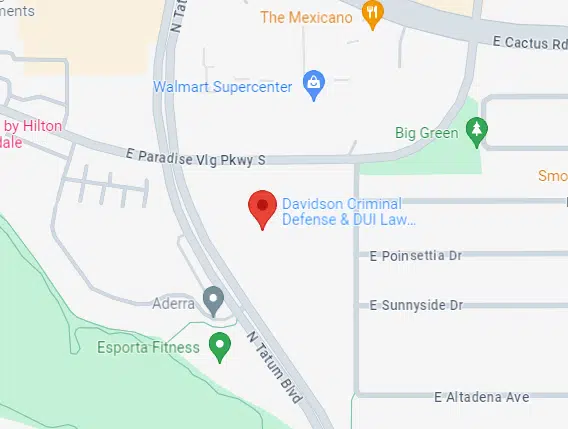
14362 N Frank Lloyd
Wright Blvd, Suite 1000,
Scottsdale, AZ 85260
Call (480) 248-7022
© 2026 Davidson Criminal Defense & DUI Law Firm• All Rights Reserved. Disclaimer | Site Map | Privacy Policy. Digital Marketing By: 
*Images are obtained under license from Canva and other third-party stock image providers, with attribution included where required.